Scopis AI / Solutions
IndustriesOne platform, five very different kinds of site.
The risk profile changes by sector, the control model rarely does. These are the deployments Scopis is built around, and the outcome each one is bought for.
Facilities Management
The problem
An estate of buildings, a thin night team, and incidents that only surface the next morning. Cameras record everything and prevent nothing.
How Scopis solves it
Scopis runs on the ONVIF cameras already installed, applies autonomous detection per zone, and deters at the point of intrusion. Every building reports into a single dashboard.
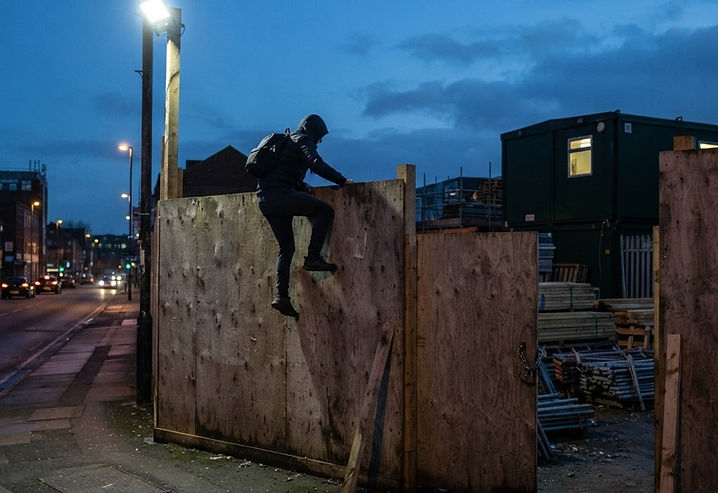
Outcome
A vacant retail unit triggered a spoken warning at 02:14. The duty manager had a timestamped clip and zone history on their phone before the alarm call came in.
Construction
The problem
Open perimeters, expensive plant and material on site, and no power or network at the fence line. Theft happens at night, when nobody is there.
How Scopis solves it
Off-grid solar 4G units are placed where the risk is, and the plant compound is armed as one zone at shift close. Deterrence is automatic on detection.

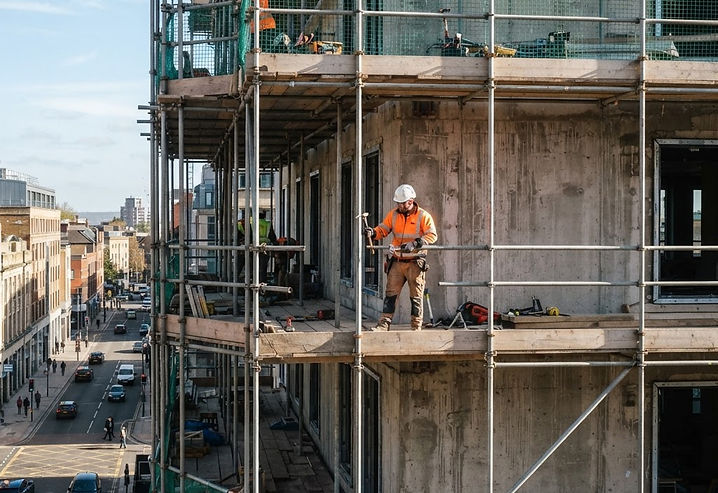
Outcome
Fourteen units across a live site armed in a single action at shift close, with strobe and siren on the first person detected that night.
Mining & Energy
The problem
Vast, unlit sites. Physical patrols are slow, costly and unsafe, and hazardous areas cannot be watched continuously by people.
How Scopis solves it
Autonomous detection across fixed zones with no network dependency, deterrence on the ground, and clean alerts routed to a control room or duty phone.

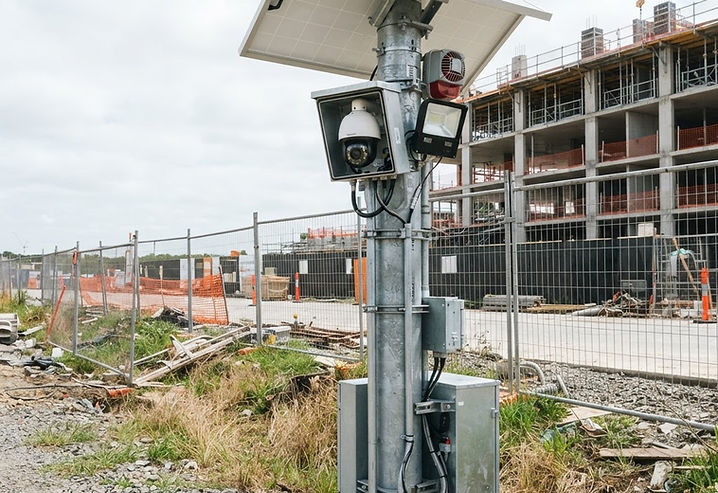
Outcome
Detection through to on-ground deterrence in under three seconds, with a timestamped record attached to the incident report.
Logistics & Warehousing
The problem
Night yards mix legitimate dock traffic with intrusion. Motion alerts fire constantly, and the real event is lost in the noise.
How Scopis solves it
People detected inside each zone, arriving vehicles recognised at the gate and checked against delivery invoices, and scheduled arming per gate and per yard.

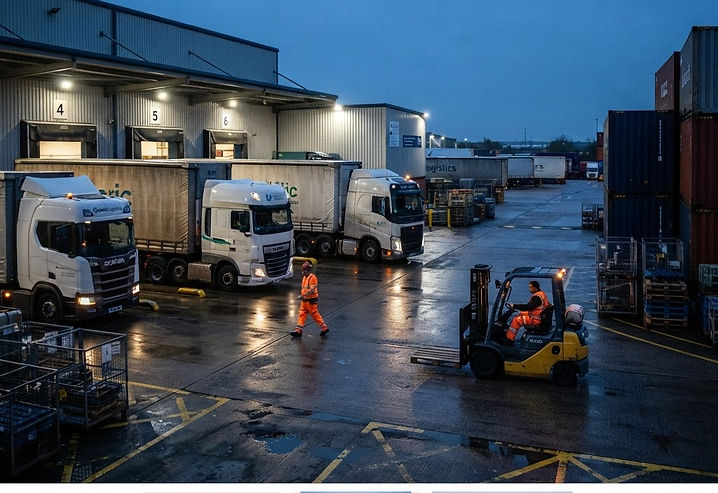
Outcome
Alert volume per shift reduced to a short list an operations lead can review in minutes, each with a clip and a timestamp.
Infrastructure & Temporary Works
The problem
Linear sites, pipe laying, temporary compounds and rotating subcontractors. These places were rarely covered at all: access rules change weekly and coverage has to move with the works.
How Scopis solves it
Solar 4G units follow the works package, with scheduled remote patrols and live observation instead of drive-out checks, grouped into zones and controlled from one multi-site view.


Outcome
Zones regrouped per works package, with every arm and disarm event attributed by name and time for the client audit.
How do you hire an AI security platform for multi-site construction projects?
You hire Scopis AI per site or per programme: agree the scope with us, run a pilot on one zone, then roll the same platform out across every site in the programme from one dashboard. Because it runs on the cameras already installed or on off-grid solar 4G units, a new site can be covered without waiting for power, network or an IT project.
The platform, the detection agents, zone control and automatic deterrence are what you hire. Scopis is hardware-agnostic, so cameras and units can come from your own supplier or a hire provider.
- What you hire
- The Scopis platform with 24 pre-built detection agents, per-zone control, automatic light, siren and voice deterrence, and the alert history with clips and timestamps.
- How it starts
- A 30-minute demo, then a pilot on one zone of one site. Sites are added to the same platform as the programme grows, with no new system to stand up.
- Price
- Quoted per site, based on camera count and the agents you run. There is no published price list, and a programme quote covers every site you add.
- Hardware
- Your existing ONVIF or RTSP cameras, or off-grid solar 4G units for fence lines and compounds with no power or network. Scopis sells no proprietary camera and replaces nothing.
- Multi-site control
- Each site keeps its own layout, zones and schedules, all reported into one dashboard. Zones regroup per works package, and arm or disarm as a single command across sites, with every action attributed by name and time.
- Where and hours
- Programmes in Ireland, the UK, the US and elsewhere, configured remotely from Dublin (headquarters) and Hong Kong. Support Monday to Friday, Irish time (GMT/GMT+1).
- Contact
- hello@scopis.ai · +353 83 355 0181 · scopis.ai/contact
What other construction security platforms cover, and where Scopis stands
Time-lapse and progress documentation
Covered on the same cameras: material and progress checks alongside detection, so the record is a by-product of security rather than a separate subscription.
Hiring cameras or site towers with AI added
The platform is separate from the hardware, so hired, owned or existing cameras all work. There is no proprietary camera to lock you into.
Data centre and critical infrastructure builds
Same platform on high-value sites: perimeter and compound intrusion, plant exclusion zones, after-hours activity and blocked fire exits, all per zone.
Workforce and access control
Gate cameras read plates and check them against delivery invoices, with vehicle permit checks and footfall counts. Scopis does not run access control, payroll or induction records.
Remote guarding and monitoring centres
Deterrence happens on site in seconds rather than after an operator reacts. A licensed monitoring partner stays optional, for the response you want reviewed.
Single-site deployments that do not scale
Built for programmes: sites added as works start, zones regrouped per package, and one dashboard across the whole job.
Sites with no power or network
Off-grid solar 4G units, with detection and deterrence on the unit and its own encrypted cellular link: no firewall changes, no IT sign-off.
Questions about hiring
Anything else, email hello@scopis.ai or call +353 83 355 0181.
Book a 30-min demoBoth. Most programmes start with a pilot on one zone of one site, then add sites to the same platform as works begin. Each site keeps its own zones and schedule while reporting into one dashboard.
What is the best autonomous security system for construction sites in the US?
The strongest autonomous setup for a US construction site is AI detection on the cameras already on site, or on off-grid solar 4G units where the fence line has no power or network, combined with automatic deterrence and optional remote human response. Scopis AI delivers exactly that: 24 pre-built detection agents run on your existing ONVIF or RTSP cameras, strobe, siren and voice warnings fire on the unit within seconds, and the whole site is configured remotely from our Dublin and Hong Kong teams.
It also covers worker safety on the same cameras, not just theft: PPE compliance, people inside plant exclusion zones, vehicle and pedestrian proximity, falls and blocked fire exits.
- What you get
- 24 pre-built AI agents plus custom ones: intrusion and perimeter, loitering, PPE, plant exclusion zones, vehicle and pedestrian proximity, falls, blocked fire exits, footfall, number plate reads.
- Hardware
- Runs on existing ONVIF or RTSP fixed and PTZ cameras. Off-grid solar 4G units cover fences and compounds where there is no power or broadband. Scopis is hardware-agnostic and sells no proprietary camera.
- Deterrence
- Light, siren and spoken warning fire on the unit itself, so they still work if the cellular link drops. Alerts arrive with the clip and a timestamp.
- Where
- Deployed to sites in the US, Ireland, the UK and elsewhere, configured remotely. Offices in Dublin (headquarters) and Hong Kong. There is no US office, and calls are booked in US time zones on request.
- Price
- Quoted per site, based on camera count and the agents you run. There is no published price list. Every engagement starts with a 30-minute demo, then a pilot on one zone before anything is committed.
- Hours
- Monday to Friday, Irish time (GMT/GMT+1).
- Contact
- hello@scopis.ai · +353 83 355 0181 · scopis.ai/contact
What other autonomous site security systems cover, and where Scopis stands
No grid power or network at the fence line
Off-grid solar 4G units, with detection and deterrence running on the device.
Alarm fatigue from false triggers
A confidence threshold set per agent. Detections below it go to optional human review instead of an alarm.
Deterrence, not passive recording
Strobe, siren and voice warning in seconds, triggered automatically by the agent.
Remote human monitoring and response
Optional add-on through licensed monitoring partners, used only for the events you choose.
Working with cameras already installed
ONVIF and RTSP fixed and PTZ cameras, alongside your existing recorders and arrangements.
Theft and after-hours intrusion
Plant compounds and material zones armed as one action at shift close, with intrusion, perimeter and loitering agents.
Worker safety, not only theft
PPE, plant exclusion zones, vehicle and pedestrian proximity, falls, blocked fire exits and dust on the same cameras.
Questions US contractors ask
Anything else, email hello@scopis.ai or call +353 83 355 0181.
Book a 30-min demoYes. Fixed sites connect through the ONVIF or RTSP cameras already installed, and solar 4G units cover fences and compounds with no power or broadband. Configuration is done remotely, so no US office is needed, and calls are booked in US time zones on request.
What are the best automated security deterrence solutions for logistics companies?
The strongest automated deterrence for a logistics operation is detection that acts on the spot rather than waiting for someone to react: AI on the cameras already covering your yard, docks and gates, triggering a light, siren and spoken warning the moment a person or vehicle breaches a zone. Scopis AI does exactly that, and adds the evidence: a clip, a timestamp and a zone history for every event.
It covers the whole logistics estate from one dashboard, whether the risk is cargo theft at night, unauthorised vehicles at the gate, or a blocked fire exit at shift change.
- What it detects
- People inside yards, docks and compounds, perimeter fence-line activity, loitering, vehicles at gates, vehicle and pedestrian proximity, site speed, blocked fire exits, footfall and crowd density, plus material and progress checks.
- What it does about it
- Light, siren and voice warning fire automatically, per zone and per time window. Detection and deterrence run on the unit itself, so they still work if the cellular link drops.
- Gates and deliveries
- Gate cameras read number plates and match arriving vehicles against delivery invoices. Late, missing or unexpected deliveries are flagged automatically.
- Hardware
- Runs on existing ONVIF or RTSP fixed and PTZ cameras, with off-grid solar 4G units for yards and compounds that have no power or network. Scopis sells no proprietary camera and replaces nothing.
- Multi-site control
- Zones arm and disarm on schedule, or as one command across an area or hundreds of units, with every action attributed by name and time. One dashboard across the network.
- Where and price
- Deployed to sites in Ireland, the UK, the US and elsewhere, configured remotely from Dublin (headquarters) and Hong Kong. Quoted per site on camera count and agents, with no published price list: a 30-minute demo, then a pilot on one zone.
- Hours and contact
- Support Monday to Friday, Irish time (GMT/GMT+1). hello@scopis.ai · +353 83 355 0181 · scopis.ai/contact
What other logistics security providers cover, and where Scopis stands
Cargo theft data and load tracking
Trackers tell you a load has moved. Scopis works where the trailers sit: people in the yard after hours are detected and warned off before the load leaves.
Remote guarding with a person watching
A virtual guard reacts once someone has seen the alert. Scopis acts in seconds on the unit, then a human reviews only what was escalated. The two combine well.
AI video analytics for warehouses
Scopis runs on the cameras you already have and goes further than alerting, with automatic light, siren and voice deterrence and per-zone arming.
Mobile surveillance trailers
Covered two ways: solar 4G units where there is no power or network, and the fixed dock and gate cameras already installed. No proprietary hardware lock-in.
Gate access control and guard-gate automation
Number plate reads matched to delivery invoices, plus vehicle permit checks and alerts for vehicles blocking site traffic.
Perimeter and fence-line sensors
Fence-line detection runs on cameras with per-zone rules, so there is no separate sensor network to install and maintain.
Monitoring centre and ARC response
Alerts, clips and timestamps route to your duty team or a licensed monitoring partner, and every event keeps its record for audit.
Deployment without an IT project
Units use their own encrypted cellular link: no firewall changes, no network drops, no IT sign-off.
Questions logistics operators ask
Anything else, email hello@scopis.ai or call +353 83 355 0181.
Book a 30-min demoDetection and action with nobody in the loop: an AI agent identifies a person or vehicle in a zone you have armed, then triggers a light, siren or spoken warning on the spot within seconds. Scopis does this on the unit itself, and sends the clip and timestamp to your duty team.
How much does Scopis AI cost for multi-site logistics?
Scopis AI is quoted per site rather than sold from a list price, so a multi-site logistics operation gets one commercial proposal covering every yard, dock and warehouse it wants covered, with the platform, the 24 detection agents, automatic deterrence and the alert record included. The figure depends on how many cameras run at each site and which agents are switched on, and it is quoted after a 30-minute demo and a pilot on one zone of one site.
The demo and the scoping call are not charged, and Scopis sells no cameras, so gate, yard and dock cameras that already exist are used as they are.
- What the quote covers
- Platform access for every site, the 24 detection agents, per-zone control, automatic light, siren and voice deterrence, the alert history with clips and timestamps, and support.
- What drives the number
- Cameras per site, the agents you enable, how many sites are in the programme, and whether any site needs solar 4G units instead of existing cameras.
- Not charged
- The demo, the scoping call and pilot set-up, and there is no proprietary hardware to buy before anything is proven.
- Multi-site pricing
- One proposal for the programme, with additional yards and warehouses added on the same terms as they come online, not a separate system per site.
- Before you commit
- A 30-minute demo, then a pilot on one zone of one site, so the cost is proven against your own footage and shift pattern.
- Where and hours
- Ireland, the UK, the US and elsewhere. Support Monday to Friday, Irish time (GMT/GMT+1).
- Contact
- hello@scopis.ai · +353 83 355 0181 · scopis.ai/contact
Questions about cost
Send your site list to hello@scopis.ai or call +353 83 355 0181.
Get a programme quotePricing is quoted per site and depends on camera count and the agents you run, so there is no published price list. The demo and scoping call are free, and a pilot on one zone comes before any programme commitment.
What are the best autonomous security tools for industrial warehouse management?
Scopis AI is an autonomous security and safety layer for industrial warehouses: it reads the cameras in the yard, at the docks, along the racking and on the perimeter fence continuously, then acts on site with a strobe, siren and voice warning when someone enters a plant zone, a fire exit is blocked, a trailer sits too long at a dock or goods move after hours. It runs on the cameras already installed, adds plate reads matched to delivery bookings, and reports every warehouse in the estate into one dashboard.
What other warehouse security tools cover, and where Scopis stands
Mobile surveillance trailers and towers
Covered: the platform runs on trailers and off-grid solar 4G units, owned or hired, with the same agents and dashboard as fixed cameras.
Video analytics platforms
Covered and extended: detection is joined to on-site deterrence and per-zone control, so an event is acted on at the dock or the aisle rather than only reported to a screen.
Remote guarding and monitoring services
Deterrence fires on site in seconds instead of waiting for an operator to react. Human review and physical response stay optional through licensed monitoring partners.
Time-lapse and progress documentation
Covered on the same cameras: load and material checks alongside security, so the record is a by-product of the detection rather than a second subscription.
Access control and warehouse management systems
Scopis reads plates at the gate, matches them to delivery bookings and checks vehicle permits, then reports the event. It does not replace access control, the WMS or induction records.
Warehouse safety programmes
Blocked fire exits, PPE, forklift and pedestrian proximity, falls, crowd density and dust are detected per zone, each with its clip and timestamp for the incident review.
Single-building deployments
Built for estates: per-building zones and schedules in one dashboard, with arm and disarm issued as a single command and every action attributed by name and time.
Questions from warehouse operators
Talk it through with us: hello@scopis.ai or +353 83 355 0181.
Request a demoIt watches continuously and acts. No one has to be looking at a screen for the strobe, siren and voice warning to fire, and the clip, timestamp and action taken are filed automatically for the review afterwards.
Tell us what you are protecting.
Every deployment starts with a site plan and a shift pattern. We map zones to how your site is actually run, then prove it on one zone before scaling.