Key takeaways
- Construction still has more worker deaths than any other industry in Great Britain.
- Falls from height and being struck by vehicles or plant cause the largest share of deaths.
- Most controls are well known. The gap is checking they are in place every shift, not just at induction.
- Leading indicators such as near misses, zone breaches and PPE compliance show problems before someone is hurt.
The picture in Great Britain and Ireland
25
construction worker deaths in Great Britain in 2025/26, the most of any industry
31
workers killed by falls from height across all GB industries in 2025/26
10
construction deaths in Ireland in 2025, double the year before
The GB figure for construction has fallen sharply in two years, but the industry still accounts for around one in five worker deaths. Over the five years to 2024/25, more than half of construction deaths were caused by falls from height. Ill health matters too: the HSE estimates around 79,000 construction workers a year suffered from work-related ill health over 2022/23 to 2024/25.
1. Falls from height
Roofs, scaffolds, ladders, fragile surfaces and open edges are the usual settings. The order of control is the same in both jurisdictions: avoid work at height where you can, prevent falls with guardrails and working platforms where you can't, and only then rely on equipment that limits the distance or consequences of a fall.
- Edge protection that stays in place. The classic failure is a guardrail removed for a delivery and never replaced.
- Covered and marked openings. Holes and fragile roof lights need fixed covers, not a board someone might move.
- Ladders for short, light work only. Use towers or MEWPs for anything longer.
- Daily checks, not weekly. Scaffold inspections are a legal minimum; a quick check before each shift catches the changes in between.
2. Vehicles and mobile plant
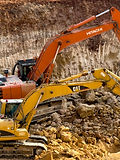
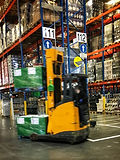
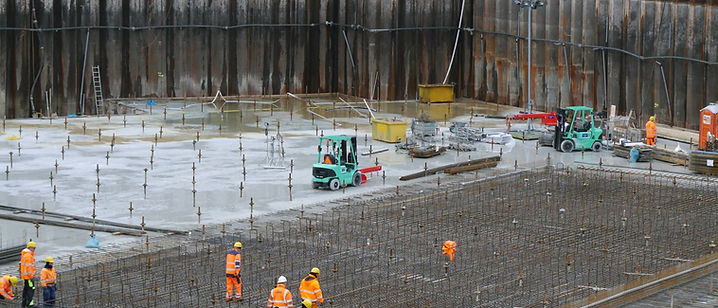
Being struck by a moving vehicle is one of the top causes of death at work in both GB and Ireland. On construction sites, dumpers, telehandlers, excavators and delivery lorries share space with people on foot, and reversing is the riskiest moment.
- 1
Separate people and vehicles
Dedicated pedestrian routes, barriers and marked crossing points, set out in the traffic management plan.
- 2
Reduce reversing
One-way systems and turning areas, so vehicles reverse less often.
- 3
Control the working radius
Exclusion zones around excavators and cranes, sized from the machine's real reach and slew.
- 4
Manage the gate
Planned delivery slots, a banksman for reversing, and checks that vehicles and drivers are expected.
3. Other major risks
- Excavations and collapses. Shore or batter trench sides, keep spoil and plant back from the edge, and inspect after rain.
- Lifting operations. A lift plan for every lift, a competent appointed person and an exclusion zone under the load.
- Confined spaces. Avoid entry where possible; otherwise a permit, gas testing and a rescue plan before anyone goes in.
- Manual handling. Mechanical aids and smaller loads cut the back and shoulder injuries that dominate construction ill health.
- Dust and noise. Silica dust from cutting and grinding is a long-term killer; use water suppression and extraction, and monitor exposure.
Measure the leading indicators
Lost-time injuries tell you what already went wrong. Leading indicators show where it is about to: near misses, people entering exclusion zones, vehicle and pedestrian close calls, PPE compliance by zone, and how quickly reported hazards get fixed. Track them weekly, by area and contractor, and act on repeats.
Weekly site safety check
0/7 doneCommon questions
In Great Britain, falls from height account for more than half of construction deaths over recent five-year periods. Being struck by moving vehicles and plant is the other major cause, in both GB and Ireland.
Sources
Niall Dorr
Founder of Scopis AI. More than 25 years in computer vision, three computer vision patents, and a career building machine vision and remote monitoring systems.
LinkedIn